
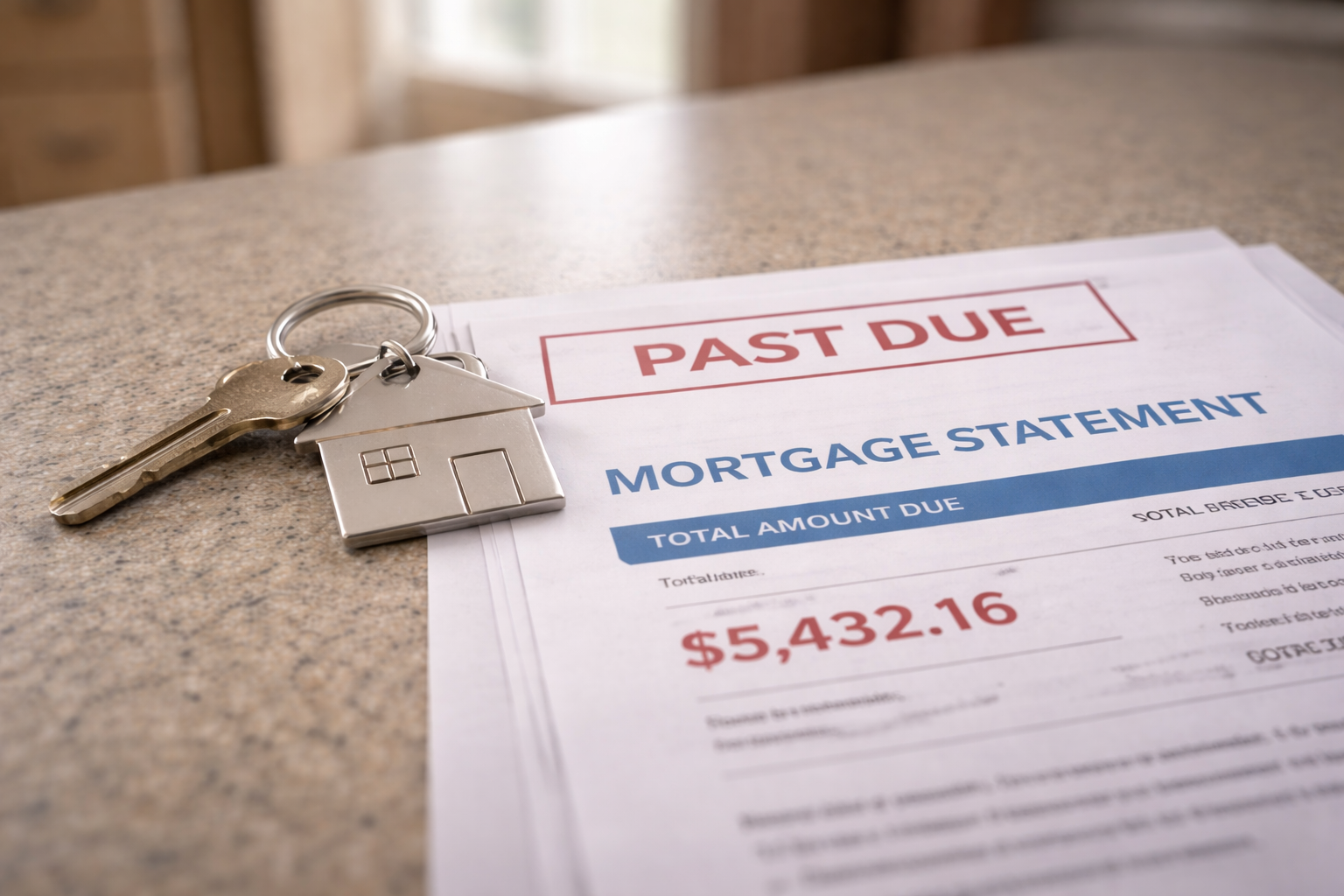
You have more time and more options than most people realize.
In 2024, Suffolk County recorded 933 new foreclosure filings — the highest in the New York metro region (PropertyShark). Nassau County saw 567 filings that same year. Together, Long Island accounted for roughly 1,500 foreclosure cases — about 24% of the entire metro area.
Watch our free video guide breaking down exactly how foreclosure works in New York, what your legal rights are at every stage, and the practical steps you can take right now to stop the process and protect your home.
New York is one of the most borrower-friendly states in the country. The process is judicial — a bank cannot take your home without a court order. Mandatory 90-day pre-foreclosure notices, required settlement conferences, and one of the longest foreclosure timelines in the nation protect borrowers at every stage.
This guide breaks down exactly how foreclosure works in New York, what legal protections you have, and the practical options available to Long Island homeowners. For a broader look at every fast-sale option, read our guide to selling your Long Island house fast.
Advisory note: New York foreclosure law is complex. Consult a licensed New York foreclosure defense attorney as early as possible. Nothing in this guide constitutes legal advice.
How Foreclosure Actually Works in New York
Before exploring your options, you need to understand the process. Knowing the timeline gives you leverage.
New York Is a Judicial Foreclosure State
This is the single most important thing to know. Unlike states where a bank can foreclose through a simple notice process — called non-judicial foreclosure — New York requires the lender to file a lawsuit and get a court order before taking your property. Every step goes through a judge.
That requirement explains why New York has one of the longest foreclosure timelines in the country. According to ATTOM Data’s 2025 analysis, the average New York foreclosure takes approximately 1,910 days from the first missed payment to the completed sale — roughly five years. Even in the fastest uncontested cases, expect a minimum of about six months from the bank’s complaint to a judgment.
That doesn’t mean you should wait and hope. It means you have time to make a strategic decision rather than a panicked one.
The Foreclosure Timeline: Step by Step
Here’s how the process unfolds in New York.
1. Missed Payments (Days 1–120)
Federal mortgage servicing rules under 12 C.F.R. §1024.41 generally prohibit lenders from starting foreclosure until your loan is at least 120 days delinquent — four missed monthly payments. During this window, your servicer must inform you about loss mitigation options.
2. The 90-Day Pre-Foreclosure Notice — RPAPL §1304
This is New York’s most powerful borrower protection. Before a lender can file a foreclosure lawsuit on an owner-occupied one-to-four-family home, they must send a formal notice at least 90 days in advance. New York courts treat this as a strict condition precedent — the lawsuit cannot proceed without it.
The law is specific about what this notice must include and how the lender must deliver it:
- Both certified mail and first-class mail, sent in separate envelopes
- Printed in at least 14-point type
- Specific statutory language spelled out in RPAPL §1304
- A list of at least five government-approved housing counseling agencies serving your area
- Only one notice per 12-month period (RPAPL §1304(4))
New York courts strictly enforce these requirements. Lenders who fail to follow them precisely face dismissal of the foreclosure action entirely. Under RPAPL §1306, the lender must also file notice information with the New York Superintendent of Financial Services within three business days of mailing.
What this means for you: A 90-day notice is your signal to act — not to panic. At least three full months stand between you and a court filing, and the actual process extends much longer after that.
3. Foreclosure Complaint Filed
After the 90-day period expires, the lender files a summons and complaint with the court. Under legislation enacted in 2022 (SB 5785), the complaint must affirmatively state that the plaintiff has standing — meaning they must prove they actually own or hold the mortgage and note.
Once served, you have 20 days to respond if served in person, or 30 days if served by mail. Filing an answer is critical. Failing to respond lets the lender seek a default judgment, accelerating the entire process.
4. Mandatory Settlement Conference — CPLR §3408
New York gives homeowners another major protection here. Within 60 days after the lender files proof of service, the court must schedule a settlement conference for all residential foreclosure cases involving owner-occupied property.
Both you and the lender’s representative must appear and negotiate in good faith. Judges measure good faith based on the totality of circumstances and hold real power over lenders who don’t participate sincerely — including staying the foreclosure, dismissing the case, or barring the lender from collecting fees and interest.
Multiple conferences are common. They can extend for months and create real opportunities to negotiate a loan modification, repayment plan, short sale agreement, or other resolution. Homeowners who show up and engage often find workable options. If you don’t have an attorney, the court will advise you of your rights and can connect you with free housing counseling.
5. Judgment and Sale
When no resolution emerges from settlement conferences, the case moves toward judgment. The court issues a judgment of foreclosure and sale, then schedules the property for auction.
Even at this stage, rights remain. New York law under RPAPL §1341 allows you to reinstate the loan by paying all arrearages at any point before the final judgment. After judgment, paying the full amount owed before the sale can still halt proceedings.
One critical distinction: New York has no post-sale redemption period. Under RPAPL §1353, the conveyance to the buyer happens immediately once the auction closes. You cannot buy the home back after the auction. Acting before the sale is essential.
Your Options When Facing Foreclosure on Long Island
More options exist than most homeowners realize. Here they are roughly in order from earliest intervention to last resort.
Option 1: Loan Modification
A loan modification changes the terms of your existing mortgage — typically by reducing the interest rate, extending the loan term, or adding missed payments to the end of the loan. Lenders often discuss this first, especially during CPLR §3408 settlement conferences.
Who it’s best for: Homeowners who experienced a temporary hardship — job loss, medical emergency, divorce — but now have stable income and want to keep their home.
The reality: Modifications can be difficult to obtain and the approval process moves slowly. Lenders require extensive documentation and approval isn’t guaranteed. The mandatory settlement conferences do provide structured judicial oversight that most states lack, which improves your odds.
Option 2: Reinstatement
Paying the total amount of missed payments plus fees and penalties reinstates your loan and stops the foreclosure. Under New York law, this right exists all the way until the final judgment of foreclosure.
Who it’s best for: Homeowners who came into money — a bonus, gift, inheritance, or insurance payout — or resolved a short-term cash flow problem.
The reality: Reinstatement requires paying every missed payment plus late fees, attorney fees, and costs the lender has incurred. On a Long Island mortgage, those arrearages add up quickly.
Option 3: Forbearance or Repayment Plan
A forbearance agreement temporarily pauses or reduces your payments for a set period. A repayment plan spreads missed payments over several months on top of your regular payment. Both require direct negotiation with your servicer.
Who it’s best for: Homeowners dealing with a short-term disruption who are confident they can resume and catch up on payments.
Option 4: Sell the Property
Long Island homeowners in foreclosure often overlook this option — but it’s frequently the most powerful one. With Suffolk County median home values around $680,000–$725,000 and Nassau County around $831,000–$840,000 (OneKey MLS, late 2025–early 2026), most homeowners in foreclosure carry significant equity even after accounting for the mortgage balance, arrearages, and selling costs.
Selling before the foreclosure completes lets you pay off the mortgage, avoid the credit damage of a completed foreclosure judgment, and walk away with cash.
Two paths exist:
Traditional listing with a real estate agent: This can maximize your sale price but takes time — typically 3 to 8 months on Long Island from listing to closing. Deep in the foreclosure process, that window may not be available.
Direct cash sale: A cash buyer can close in as little as 7 to 21 days. No repairs, no showings, no agent commissions, no risk of buyer financing falling through. The offer will be below full retail value, but after factoring out commissions, repairs, and carrying costs, the net proceeds often compare favorably — and arrive in weeks rather than months. Selling in pre-foreclosure lets you avoid the worst consequences entirely.
Why this matters for your credit: Selling before the foreclosure completes means it doesn’t appear as a foreclosure on your credit report — it records as a normal sale. The missed mortgage payments will still show, but that’s far less damaging than a completed foreclosure judgment. This is one of the strongest arguments for acting early.
Advisory note: Consult a real estate attorney before selling during an active foreclosure proceeding to confirm all lien and payoff figures are accurate at closing.
Option 5: Short Sale
When you owe more than the home is worth — relatively uncommon in today’s Long Island market — a short sale involves selling for less than the mortgage balance with lender approval. The lender agrees to accept the reduced amount and forgive the remaining debt.
Who it’s best for: Homeowners who are underwater on their mortgage with no realistic way to catch up.
The reality: Short sales require lender approval, which can take months. You must demonstrate financial hardship, and the lender may or may not agree to forgive the deficiency.
Option 6: Deed in Lieu of Foreclosure
Voluntarily transferring the property to the lender releases you from the mortgage obligation, avoids the public foreclosure process, and typically does less credit damage than a completed foreclosure judgment.
Who it’s best for: Homeowners with no equity who can’t sell and want to minimize credit damage.
The reality: Lenders don’t always agree, especially when other liens exist on the property. A deed in lieu still appears as a negative event on your credit report.
Option 7: Bankruptcy
Filing for Chapter 13 bankruptcy triggers an automatic stay under 11 U.S.C. §362 that immediately halts all foreclosure proceedings. Chapter 13 lets you propose a repayment plan — typically 3 to 5 years — to catch up on mortgage arrears while keeping your home.
Who it’s best for: Homeowners with regular income who need time to catch up and want to keep the property.
The reality: Bankruptcy carries serious long-term credit implications and legal costs. For homeowners who genuinely want to stay and have the income to support a repayment plan, though, Chapter 13 can be an effective tool.
What Foreclosure Does to Your Credit
A completed foreclosure stays on your credit report for seven years from the date of the first missed payment — not from when the foreclosure finalizes. The Fair Credit Reporting Act sets this timeline under 15 U.S.C. §1681c.
The score damage is significant. FICO data shows homeowners with higher scores before foreclosure experience steeper drops — someone with a 780 score can expect to lose 140 to 160 points. A lower starting score typically means a drop of around 100 points.
Beyond the score itself, a foreclosure triggers waiting periods before qualifying for a new mortgage:
- FHA loans: 3-year waiting period (may reduce to 1 year with extenuating circumstances)
- VA loans: 2-year waiting period
- Conventional loans: 7-year waiting period (may reduce to 3 years with extenuating circumstances)
- USDA loans: 3-year waiting period
The impact does diminish over time. Most people see meaningful credit recovery within 2 to 3 years when they stay current on all other obligations.
Selling before the foreclosure completes avoids the judgment entirely. Missed mortgage payments still show, but that’s far less damaging than a completed foreclosure on record. Homeowners navigating divorce, inherited property, or probate sales face similar time pressures — in each case, early action protects the most options.
Deficiency Judgments: Can the Bank Come After You for More?
This question keeps many homeowners up at night. Here’s the clear answer.
After a foreclosure sale, the lender can potentially pursue a deficiency judgment under RPAPL §1371 — a court order requiring you to pay the difference between what you owed and what the property fetched at auction. Several protections limit this risk, though.
The lender has only 90 days from delivery of the deed to file a motion for a deficiency judgment. Miss that window and the sale proceeds satisfy the debt in full — the lender can never pursue the remainder.
The court also calculates the deficiency as the total debt minus the higher of the auction sale price or the fair market value. This prevents lenders from staging a lowball auction and then pursuing a large deficiency claim.
In practice, very few lenders pursue deficiency judgments on Long Island residential properties. The legal costs and collection difficulties make it impractical in most cases — especially when the homeowner is already in financial distress. Knowing these protections exist matters regardless.
The Foreclosure Abuse Prevention Act (FAPA)
One more legal protection worth understanding: the Foreclosure Abuse Prevention Act, which took effect December 30, 2022.
Before FAPA, lenders used a troubling tactic — voluntarily dismissing a foreclosure case, then refiling it later, effectively resetting the six-year statute of limitations under CPLR §213(4) and keeping homeowners in legal limbo indefinitely. The New York Court of Appeals had permitted this in a 2021 case called Freedom Mortgage Corp. v. Engel.
FAPA closed that loophole decisively:
- Voluntarily discontinuing a foreclosure action no longer resets the statute of limitations (CPLR §3217(e))
- Lenders cannot unilaterally revoke loan acceleration to restart the clock (CPLR §203(h))
- A lender cannot file a second foreclosure action while the first remains pending (RPAPL §1301(3)–(4))
Lenders must now prosecute their cases or risk losing the ability to foreclose entirely when the six-year statute of limitations expires. It’s a significant shift in favor of homeowners.
How to Take Action Today
Facing foreclosure on Long Island requires a clear action plan. Here’s where to start.
Step 1: Don’t ignore the mail. A 90-day pre-foreclosure notice under RPAPL §1304 means at least three months remain before the bank can even file a lawsuit. Use that time.
Step 2: Contact a HUD-approved housing counselor. These services are free and can negotiate with your lender on your behalf. Your 90-day notice should include a list of approved agencies in your area.
Step 3: Respond to any court filings. When the summons and complaint arrives, respond within the deadline — 20 days if served in person, 30 days if served by mail. Not responding leads to a faster default judgment.
Step 4: Attend every settlement conference. CPLR §3408 conferences give you a direct opportunity to negotiate with the lender under judicial supervision. Skipping them forfeits one of your most valuable protections.
Step 5: Know your property’s value. With Long Island property values where they are, many homeowners in foreclosure carry significant equity. Get a realistic assessment of what your home is worth. Read our breakdown of how cash offers are calculated to understand what a direct sale might net you.
Step 6: Consider a direct cash sale. When time is short and you need to close quickly, a cash buyer can purchase your property in as little as 7 to 21 days. This pays off the mortgage, stops the foreclosure, protects your credit from a completed judgment, and puts any remaining equity in your pocket. Read more about how cash buyers work and what separates legitimate buyers from wholesalers.
Get a Cash Offer on Your Long Island Home
The Property Father buys homes directly from Long Island homeowners facing difficult situations — including foreclosure. No listing, no repairs, no agent commissions, and no uncertainty.
Here’s how it works:
- Tell us about your property — Call (516) 548-6558 or fill out the form
- Get a fair cash offer — Usually within 24 to 48 hours
- Close on your timeline — As fast as 7 days, or whenever works for you
We handle the paperwork, work with your lender when needed, and make the process as simple as possible during an already stressful time.during an already stressful time.
Frequently Asked Questions
These are the questions we hear most from Long Island homeowners dealing with foreclosure.
How long does the foreclosure process take in New York?
New York has one of the longest foreclosure timelines in the country. ATTOM Data puts the average at approximately 1,910 days — about five years — from first missed payment to completed sale. Straightforward uncontested cases can move faster, typically 7 to 18 months from complaint to judgment. The 90-day pre-foreclosure notice requirement, mandatory settlement conferences, and judicial oversight all extend the timeline in the borrower’s favor.
Can I sell my house if I’m already in foreclosure?
Yes. Selling at any point before the foreclosure sale completes is possible — and often the smartest move. A sale pays off the mortgage, prevents a foreclosure judgment from hitting your credit report, and lets you keep any remaining equity. A cash buyer can close in 7 to 21 days.
What is the 90-day pre-foreclosure notice?
Under RPAPL §1304, lenders must send owner-occupants of one-to-four-family homes a formal notice at least 90 days before filing a foreclosure lawsuit. The notice must arrive by both certified and first-class mail in separate envelopes, include specific statutory language in at least 14-point type, and list approved housing counseling agencies. Failing to comply gives the borrower grounds to seek dismissal of the foreclosure case.
Will I owe money after foreclosure?
Under RPAPL §1371, lenders have 90 days from deed delivery to file a motion for a deficiency judgment. Missing that deadline means the sale satisfies the debt in full. The deficiency calculates against the higher of the sale price or fair market value. In practice, very few lenders pursue deficiency judgments on Long Island residential properties.
Can I save my house from foreclosure?
Several paths exist: loan modification, reinstatement by paying all arrears, forbearance or repayment agreements, or Chapter 13 bankruptcy — which triggers an automatic stay that immediately halts foreclosure. The mandatory settlement conference under CPLR §3408 also gives you a court-supervised opportunity to negotiate directly with your lender.
How does foreclosure affect my credit score?
A foreclosure stays on your credit report for seven years from the date of the first missed payment. Score drops typically range from 100 to 160 points depending on your starting score, with higher scores experiencing larger drops. After a completed foreclosure, waiting periods for a new mortgage range from 2 to 7 years depending on loan type. Selling before the foreclosure completes avoids the judgment entirely and significantly limits the damage.
Last Updated: February 2026
Disclaimer: This article is for informational purposes only and does not constitute legal, tax, or financial advice. New York foreclosure and real estate laws are complex and vary by circumstance. Consult a licensed New York attorney for guidance specific to your situation. The Property Father LLC is not a law firm and does not provide legal services.
Sources & Legal References: RPAPL §1301, §1304, §1306, §1341, §1353, §1371; CPLR §203(h), §213(4), §3217(e), §3408; 12 C.F.R. §1024.41; Fair Credit Reporting Act 15 U.S.C. §1681c; Foreclosure Abuse Prevention Act (effective December 30, 2022); ATTOM Data Solutions 2025 foreclosure timeline data; PropertyShark 2024 NY Metro Foreclosure Report (Suffolk County 933 filings, Nassau County 567 filings); OneKey MLS market data (late 2025–early 2026); FICO credit score impact data. All legal citations verified as of publication date.