
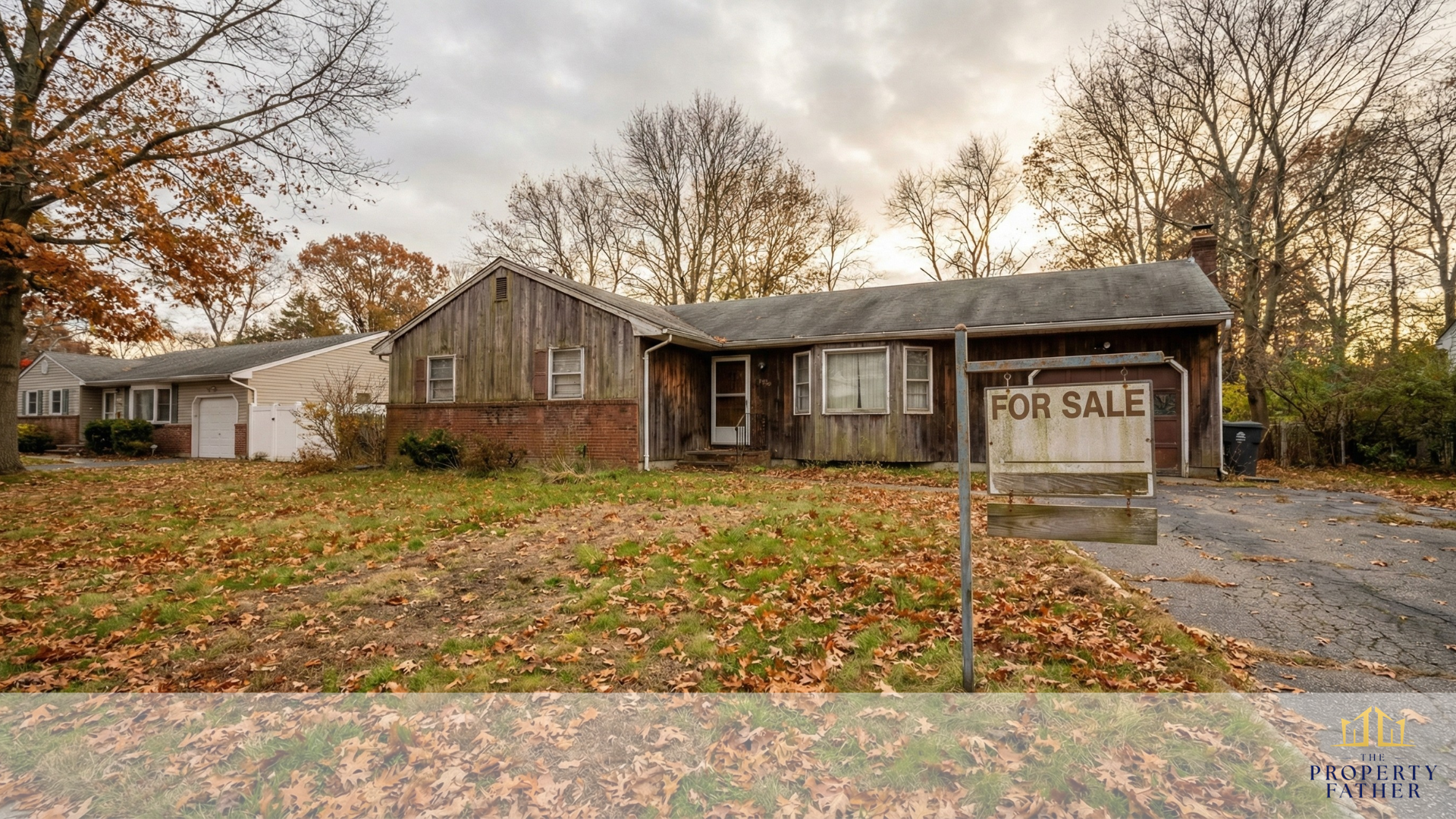
Selling as-is sounds like the easy way out—until you realize most homeowners don’t actually understand what they’re agreeing to. On Long Island, where property values can swing wildly between Nassau and Suffolk counties, the decision to sell without repairs isn’t just about convenience—it’s about whether you’ll leave money on the table or dodge a financial bullet. In 2026, distressed homeowners facing divorce, foreclosure, or inherited property challenges are discovering that selling as-is can be either their best move or their biggest regret, depending on who’s buying. Here’s what selling as-is really means, what it costs you, and when it actually makes sense.
When Does Selling to an Investor
Make More Sense Than Listing?
Not every home belongs on the open market. For distressed properties, tight timelines, and complex situations — a direct investor sale often nets more money with far less stress.
A $395K investor offer with zero repairs, zero commission, and a 10-day close can net more than a $490K listing after repairs, carrying costs, and 7–9 months of uncertainty. Always compare what you actually walk away with — not the headline number.
to close
or fees
a cash offer
Find Out If an Investor Sale Is Right for You
Get a fair, no-obligation cash offer in 24 hours. No repairs, no showings, no risk.
(516) 548-6558 thepropertyfather.com · Long Island Home Selling Guide →What Does Selling As-Is Actually Mean in New York?
Let’s start with what selling as-is doesn’t mean. It doesn’t mean you can hide structural damage, skip required disclosures, or avoid legal obligations. In New York, sellers must still provide a Property Condition Disclosure Statement, and they’re still liable for fraud or intentional misrepresentation.
What does selling as-is mean in practical terms? It means you’re selling the property in its current condition without making any repairs, updates, or improvements before closing. The buyer accepts the home with all its flaws—from cosmetic issues like outdated kitchens to serious problems like foundation cracks or outdated electrical systems.
The Legal Framework
New York’s Property Condition Disclosure Act requires sellers to disclose known defects, even in as-is sales. You’re not off the hook for transparency. You must disclose:
- Structural issues (foundation, roof, walls)
- Environmental hazards (lead paint, asbestos, radon)
- Previous repairs or insurance claims
- Water damage or flooding history
- Mechanical systems (HVAC, plumbing, electrical)
The “as-is” designation protects you from being required to fix these issues, but not from having to disclose them. This distinction matters tremendously when you’re dealing with traditional buyers versus cash buyers.
How As-Is Sales Work on Long Island
Long Island’s housing market creates unique considerations for as-is sales. In high-demand areas of Nassau County, even distressed properties can attract multiple offers. In parts of Suffolk County with older housing stock, as-is sales are sometimes expected rather than stigmatized.
The process typically unfolds this way:
- Disclosure: You complete the required property disclosure forms
- Pricing: The home is priced below market value to reflect its condition
- Marketing: Listings explicitly state “as-is” to manage buyer expectations
- Inspection: Buyers can still inspect, but they can’t demand repairs
- Negotiation: Price adjustments may occur based on inspection findings
- Closing: Sale proceeds without repair obligations from the seller
The key difference between selling as-is to a traditional buyer versus a cash buyer? Traditional buyers typically still want to negotiate price reductions after their inspection, while experienced cash buyers factor condition into their initial offer.
Why Long Island Homeowners Choose As-Is Sales
Understanding what does selling as-is mean requires looking at why homeowners make this choice. It’s rarely about laziness—it’s usually about necessity.
Financial Constraints
Many Long Island homeowners simply can’t afford the upfront costs of repairs. Consider this scenario: you inherit a Huntington home needing $40,000 in repairs. You don’t have that capital, and you can’t finance it because the property isn’t your primary residence. Selling as-is becomes your only realistic option. In some cases, homeowners in this situation are also dealing with outstanding debts against the property — our guide on how to sell a house with liens in New York explains how those get resolved at closing without paying them off upfront.
Pre-foreclosure situations create similar pressures. When you’re facing foreclosure in Suffolk County, spending money on repairs you can’t afford doesn’t make sense—especially when you’re fighting to save whatever equity remains.
Time Sensitivity
Some situations demand speed that traditional sales can’t provide. If you’re dealing with divorce proceedings, relocating for a job, or managing a deceased parent’s estate, you might not have three to six months to list, show, negotiate, repair, and close.
Moreover, for properties dealing with probate complications in Suffolk County, the extended timeline of traditional sales can create additional legal and financial headaches. The faster you can convert the property to cash and close the estate, the simpler everyone’s lives become.
Property Condition Reality
Some Long Island homes have reached a condition where repair costs exceed what you’d recover in added value. A 1950s ranch in Babylon might need $80,000 in updates. If those updates only increase the home’s value by $60,000, you’re underwater before you start.
Foundation issues, extensive water damage, or environmental concerns like asbestos or mold can make repair costs astronomical. In these cases, understanding what does selling as-is mean becomes critical—it’s not about cutting corners but about facing economic reality.
Inherited Property Challenges
Inheriting a Long Island home often means inheriting deferred maintenance. The previous owner may have aged in place while the property deteriorated. Now you’re responsible for a home that needs everything from roof replacement to system upgrades, and you’re managing this from out of state or while dealing with grief.
For many inheritors, selling as-is represents the path of least resistance and maximum financial recovery when dealing with inherited property in New York.
The Real Costs of Selling As-Is (Long Island Numbers)
Here’s where most homeowners get surprised. Selling as-is doesn’t mean selling for pennies on the dollar, but it does mean accepting less than retail value. The question is: how much less, and compared to what?
Advisory Note: The three scenarios below are illustrative examples based on a hypothetical 3-bedroom/2-bathroom property in Patchogue with a $450,000 retail value requiring $35,000 in repairs. Actual net proceeds depend on your property’s specific value, condition, outstanding liens, negotiated commission terms, and closing costs. These figures are not a guarantee of outcome. Run your own numbers with a licensed real estate attorney before making any decisions.
The Traditional Sale Math
Let’s calculate what a traditional sale actually costs a Long Island homeowner:
Example Property: 3BR/2BA in Patchogue
| Estimated retail value | $450,000 |
| Needed repairs | $35,000 (roof, kitchen updates, bathroom refresh) |
| Holding costs during repairs/listing | $4,000 (mortgage, taxes, utilities for 3 months) |
| Realtor commission (5–6% — illustrative; rates are negotiable and not standardized following the Aug 2024 NAR settlement)* | $27,000 |
| Closing costs | $13,500 |
| Total costs | $79,500 |
| Net proceeds | $370,500 |
Commission rates are not standardized following the August 2024 NAR settlement. The 5–6% figure is a pre-settlement illustrative benchmark. Confirm current terms with any agent you engage.
Advisory Note: Real estate agent commission rates are negotiable and are no longer standardized at any fixed percentage following the NAR settlement effective August 17, 2024. Do not assume 5–6% as a fixed cost.
The As-Is Sale Math (Traditional Buyer)
Now let’s look at selling as-is to a traditional buyer through a realtor:
Same Property: As-Is Sale
| List price | $400,000 (11% below retail to reflect condition) |
| Buyer negotiation after inspection | −$15,000 |
| Final sale price | $385,000 |
| Realtor commission | $23,100 |
| Closing costs | $11,550 |
| Total costs | $34,650 |
| Net proceeds | $350,350 |
You netted $20,150 less, but you avoided $35,000 in repairs and $4,000 in holding costs—meaning you actually came out $18,850 ahead in real dollars.
The As-Is Sale Math (Cash Buyer)
Finally, the cash buyer scenario:
Same Property: Cash Sale
| Cash offer | $360,000 (20% below retail) |
| Repairs needed | $0 |
| Realtor commission | $0 |
| Closing costs | ~$3,600 (minimal) |
| Time to close | 10 days |
| Total costs | $3,600 |
| Net proceeds | $356,400 |
You netted $6,050 more than the as-is sale through a realtor—and you closed in two weeks instead of four to six months. Compared to the full traditional retail sale ($370,500 net), the cash offer nets $14,100 less. But that retail outcome required $35,000 in upfront repairs and months of carrying costs—making the effective gap far narrower than the headline numbers suggest.

When Does Each Option Make Sense?
The math reveals important truths about what does selling as-is mean financially. For a deeper side-by-side breakdown of these three paths, our guide on selling to an investor vs listing with an agent walks through the numbers in detail.
Traditional retail sale makes sense when:
- You have cash for repairs and time to wait
- Repairs will return 100%+ of their cost in value
- The market is strong and inventory is low
- You’re not under time pressure
As-is sale to traditional buyer makes sense when:
- You can’t afford repairs but have time to market
- Minor cosmetic issues, not major systems
- Strong buyer demand in your area
- You’re willing to negotiate after inspection
As-is sale to cash buyer makes sense when:
- You need to close quickly (divorce, foreclosure, relocation)
- Major repair needs make financing difficult for buyers
- Property condition makes traditional lending unlikely
- Time costs and stress outweigh price difference
For homeowners facing foreclosure in Nassau County or Suffolk County, the cash buyer option often represents the only path to preserving any equity before the bank takes possession.
Common Myths About As-Is Sales on Long Island
#1: “As-Is Means I Can Hide Problems”
This is dangerously wrong. New York disclosure laws still apply. If you knowingly conceal a defect and the buyer discovers it after closing, you can be sued for fraud. The “as-is” clause protects you from repair obligations, not from honesty obligations.
#2: “Only Cash Buyers Buy As-Is Properties”
While cash buyers are more common in as-is transactions, traditional buyers using financing can also purchase as-is properties—if the home can pass the lender’s appraisal and inspection requirements. FHA and VA loans typically won’t approve properties with major defects, but conventional loans have more flexibility.
The reality is that what does selling as-is mean often depends on which buyer pool you’re targeting and what your property’s condition actually is.
#3: “As-Is Sales Are Always Lowball Offers”
Not necessarily. If your home’s condition is relatively good but you simply don’t want to deal with cosmetic updates, you might receive offers at 90–95% of retail value. The discount reflects risk and effort, not automatic devaluation.
Conversely, if your home needs $100,000 in work, even a 30% discount might be generous when you factor in the buyer’s upcoming expenses and risk. Understanding why cash offers are lower helps set realistic expectations.
#4: “I Should List As-Is to Save Money on Repairs”
Sometimes yes, sometimes no. If repairs cost $10,000 but increase your sale price by $25,000, you’re leaving $15,000 on the table by selling as-is. Run the numbers before deciding.
However, if you’re selling during divorce proceedings and both parties can’t agree on which repairs to make, or if you’re managing probate and the estate lacks liquid funds, selling as-is removes the conflict entirely. Learn more about whether you should repair your house before selling.
#5: “As-Is Sales Close Faster”
Only if you’re selling to a cash buyer. As-is sales to traditional buyers still require financing approval, appraisals, and inspections. The only thing you’re eliminating is the repair negotiation period—the rest of the timeline remains similar.
For the complete guide on your selling options and how the process works, see our comprehensive resource: Selling Your Long Island Home Fast
When Selling As-Is Makes Perfect Sense
Scenario 1: The Inherited Fixer-Upper
Sarah inherited her uncle’s 1960s split-level in Commack. The house needed everything: new roof ($15,000), updated electrical ($12,000), kitchen renovation ($25,000), bathroom updates ($18,000), and cosmetic work throughout ($10,000). Total estimated repairs: $80,000.
Sarah lives in Florida, works full-time, and has no interest in managing a renovation from 1,200 miles away. She listed the house as-is at $380,000 (the neighborhood’s retail average was $450,000). A local investor offered $365,000 cash and closed in 12 days.
Could Sarah have netted more by making repairs and listing traditionally? Maybe $20,000–$30,000 more. But she would have spent 6–8 months managing contractors remotely, fronted $80,000 she didn’t have, and dealt with the stress of vacancy issues and potential vandalism. For her, understanding what does selling as-is mean led to choosing peace of mind over maximum profit.
Scenario 2: The Pre-Foreclosure Race
Mike and Jennifer fell behind on their Ronkonkoma home’s mortgage after Mike’s job loss. By the time he found new employment, they were three months behind and facing foreclosure proceedings. They owed $310,000 on a home worth about $380,000 in perfect condition—but their home needed $25,000 in deferred maintenance.
The two options:
- List traditionally, hope for a quick sale, and pray they closed before foreclosure (4–6 months timeline)
- Accept a cash offer of $340,000 and close in 10 days
They chose option two. After paying off the mortgage and closing costs, they walked away with $26,000—enough to avoid foreclosure, protect their credit, and make a fresh start. Trying to squeeze out another $15,000 through a traditional sale risked losing everything to the bank.
For homeowners in Nassau County or Suffolk County facing similar situations, knowing what does selling as-is mean can literally save their financial futures.
Scenario 3: The Divorce Dilemma
Tom and Lisa’s divorce was contentious enough without fighting over home repairs. Their Northport colonial needed $40,000 in updates that neither could afford to front, and they couldn’t agree on which repairs to prioritize. Every showing became an argument about who should clean and prep the house.
They agreed to sell as-is through a direct buyer, splitting the proceeds equally and moving forward with their lives. The $25,000 they potentially left on the table by not making repairs was worth it to avoid another six months of conflict and legal fees.
Red Flags: When As-Is Sales Go Wrong
The Wholesaler Trap
Not all “we buy houses” operations are created equal. Some wholesalers will offer to buy your home as-is, then immediately flip the contract to another buyer for a fee—meaning you could have gotten a better price by selling directly to the end buyer. Understanding the difference between cash buyers and wholesalers is crucial.
Questions to ask any cash buyer:
- Are you the actual buyer, or are you assigning this contract?
- Will you provide proof of funds before we sign?
- What’s your company’s track record in Long Island?
- Can you provide references from recent sellers?
Learn more about how to avoid cash home buyer scams before signing anything.
The Inspection Trap
Some buyers will agree to as-is terms, then use their inspection to renegotiate aggressively. While this is technically allowed (they’re not demanding repairs, just price reductions), it defeats the purpose of selling as-is.
Protect yourself by:
- Working with buyers who make firm offers based on disclosed condition
- Including language in the contract that price is final after acceptance
- Choosing cash buyers who’ve already factored condition into their offer
The “We’ll Make It Easy” Trap
Beware of buyers who pressure you to skip attorney review or rush through paperwork. In New York, purchase contracts customarily include an attorney review period—typically three business days—during which your attorney can review, modify, or cancel the agreement. Unlike New Jersey, New York has no statutory attorney review period; this protection comes from the contract itself. Make sure any contract you sign includes this provision—do not assume it is automatic. Check whether “we buy houses” companies are legit before proceeding.
How to Maximize Your As-Is Sale on Long Island
1. Get a Pre-Listing Inspection
It sounds counterintuitive, but knowing exactly what’s wrong with your property before buyers arrive helps you price it accurately, disclose completely, and avoid legal liability from undisclosed defects discovered after closing.
Advisory Note: Inspection costs vary by property size, age, and inspector. The $400–$600 range is a general estimate for a typical Long Island home as of 2026. Request quotes from multiple inspectors before booking. Use a certified inspector from a recognized body like ASHI to ensure the assessment is credible.
2. Price Based on Actual Condition, Not Hope
Use recent sales of similar homes in similar condition, not retail comps. Your real estate agent should pull “as-is” sales specifically, not just average neighborhood sales. Check out current Long Island real estate trends to inform your pricing strategy.
3. Disclose Everything Upfront
Comprehensive disclosure protects you legally and builds buyer trust. When buyers discover issues on their own, they assume you’re hiding more. When you disclose everything upfront, you control the narrative.
4. Make Strategic Minimal Investments
Sometimes spending $2,000 on cleaning, decluttering, and basic staging can return $10,000 in sale price. You’re not fixing major issues, but you’re making the home show-ready so buyers can see its potential.
5. Understand Your Timeline
If you truly need to close in 2–3 weeks, your buyer pool narrows to cash buyers and investors. If you can wait 60–90 days, you might attract traditional buyers willing to tackle a project.
For homeowners trying to understand how the entire process works, timing often determines which path makes the most sense.
6. Consider Multiple Offers
Don’t accept the first offer without shopping it around. Get at least 2–3 cash offers to compare, and consider listing with a realtor for 30 days to test the traditional market before committing to as-is.
7. Verify Buyer Credentials
Request proof of funds from cash buyers and pre-approval letters from financed buyers. In hot markets, some buyers make offers they can’t actually close. Verification prevents wasted time.
The Tax Implications of Selling As-Is
Many homeowners overlook the tax consequences of as-is sales, particularly when dealing with inherited property.
Capital Gains Considerations
If you’ve lived in the home as your primary residence for at least two of the past five years, you qualify for the capital gains exclusion ($250,000 for single filers, $500,000 for married couples). This applies regardless of whether you sell as-is or after repairs.
However, if you’re selling an inherited property or investment property, capital gains taxes apply to the difference between your cost basis and sale price. Selling as-is for less might actually reduce your tax burden.
The IRS provides detailed guidance on the sale of your home and capital gains exclusions.
Advisory Note: Tax treatment of real estate sale proceeds varies significantly by situation — primary residence, inherited property, and investment property are each treated differently. Consult a licensed CPA or tax attorney before closing to understand your specific tax obligations.
Deductions You Might Miss
Even in as-is sales, you can deduct:
- Real estate attorney fees
- Transfer taxes
- Title insurance
- Recording fees
- Any mortgage interest paid during the sale year
Consult a tax professional before closing to maximize deductions and minimize tax liability.
Real Long Island Neighborhood Considerations
What does selling as-is mean changes based on where your property is located on Long Island.
High-Demand Nassau County Areas
In towns like Garden City, Manhasset, or Great Neck, even distressed properties can attract buyers willing to renovate. As-is discounts might be only 10–15% because location alone carries significant value.
Moderate Suffolk County Markets
In areas like Smithtown, Huntington, or Babylon, as-is sales depend heavily on actual condition. Cosmetic issues might see 10–15% discounts, while major structural or system issues could require 25–30% discounts. For a full breakdown of what sellers in this region actually net after all costs, see our guide to selling your Suffolk County home for cash.
Struggling Market Areas
Some Long Island neighborhoods have seen declining values or have oversupply. In these markets, as-is properties might sit longer or require steeper discounts to attract any buyers. Understanding your specific micro-market helps you set realistic expectations for what does selling as-is mean in your situation.
Making Your Decision: A Framework
Ask yourself these questions:
- Can I afford needed repairs? (If no → as-is likely makes sense)
- Do I have 4–6 months to wait? (If no → cash buyer makes sense)
- Will repairs return their cost in added value? (If no → as-is makes sense)
- Am I facing legal/financial deadlines? (If yes → as-is/cash makes sense)
- Is the property financeable in current condition? (If no → cash buyer required)
- Do I have the mental/emotional bandwidth for a traditional sale? (If no → as-is makes sense)
If you answered “no” or “yes” to questions that favor as-is sales, you’re likely making the right choice. If you’re uncertain, get multiple opinions—from real estate attorneys, agents, and direct buyers who can explain your options.
Ready to Sell Your Long Island Home As-Is?
Understanding what does selling as-is mean is just the first step. The real question is whether it’s the right move for your specific situation, timeline, and financial goals.
If you’re facing divorce, foreclosure, dealing with inherited property, or simply don’t have the resources for repairs and months of showings, selling as-is can be the fastest path to a fresh start. You won’t get retail value, but you’ll avoid repair costs, holding expenses, and the emotional toll of a prolonged sale process.
The key is working with a buyer who offers transparency, speed, and fair pricing based on your home’s actual condition—not someone trying to take advantage of your situation.
For the complete guide on selling your Long Island home fast, including detailed process explanations and timeline comparisons: Selling Your Long Island Home Fast
Questions? Call (516) 548-6558