
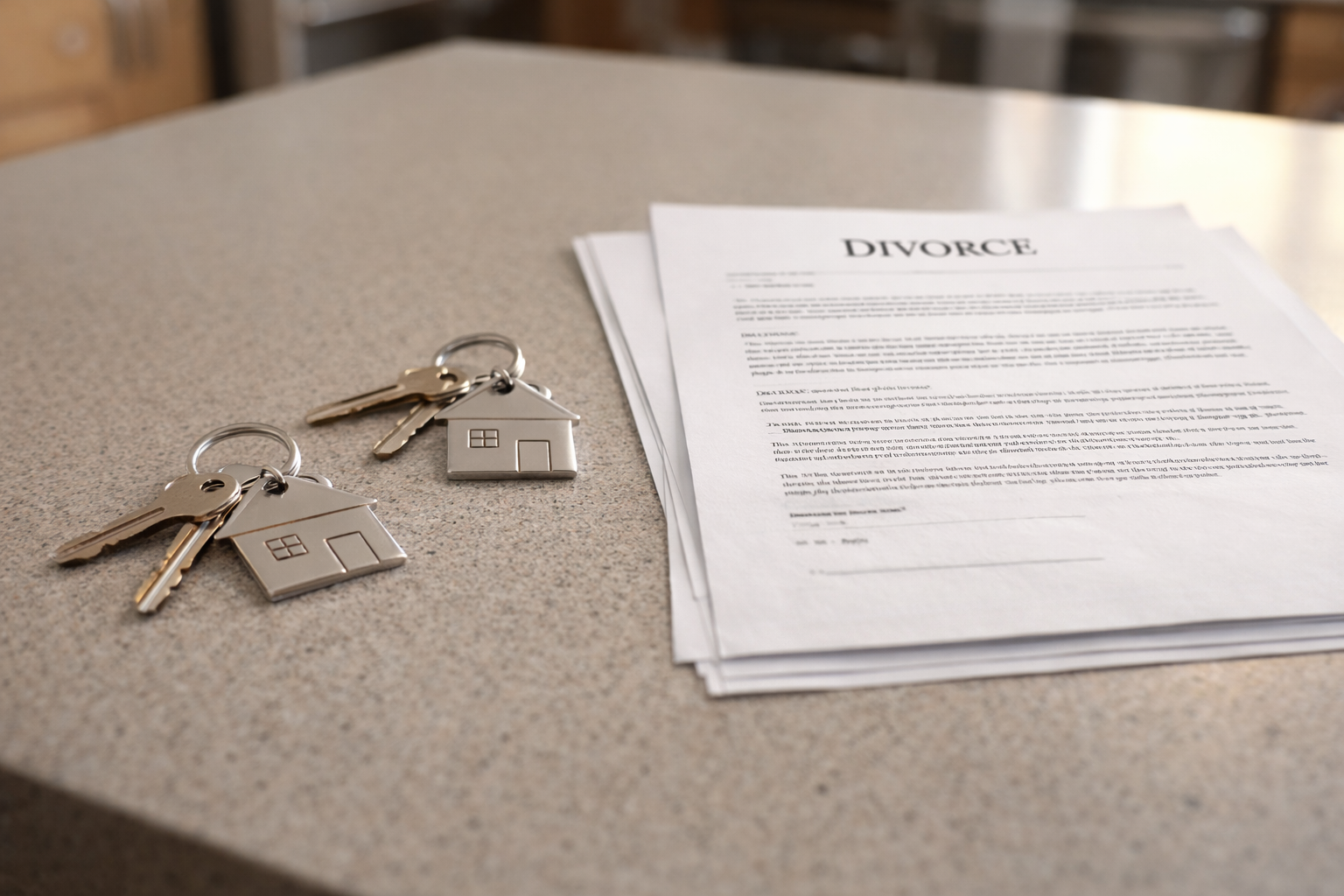
If you need to sell your house during a divorce on Long Island, you’re facing one of the most complex real estate transactions there is.
It’s usually the most valuable asset either spouse owns. On Long Island right now, the median sold price sits around $680,000–$725,000 in Suffolk County and $831,000–$840,000 in Nassau County (OneKey MLS, late 2025–early 2026). That’s a significant amount of equity tied up in a single asset — equity that both parties need to move forward with their lives.
Watch: How we break down your legal rights when selling a Long Island home during divorce — including equitable distribution under New York Domestic Relations Law §236, court-ordered sales, and how a cash offer can simplify the process for both parties.
But selling a home during divorce isn’t as simple as sticking a sign in the yard. New York’s equitable distribution laws, court timelines, and tax implications create layers of complexity that can drag the process out for months or even years if you’re not strategic about it.
This guide walks you through exactly how New York law handles the marital home in divorce and your four realistic options. You’ll also learn the legal landmines to avoid and why a direct cash sale might be the fastest way to close this chapter. For a broader overview of every fast-sale option available, read our guide to selling your Long Island house fast.
Advisory note: New York divorce and equitable distribution law is applied case by case. Consult a licensed New York matrimonial attorney before making any decisions about the marital home. Nothing in this guide constitutes legal advice.
How New York Law Treats Your Home in Divorce
Before you can decide what to do with the house, you need to understand how the law classifies it. New York Before deciding what to do with the house, you need to understand how the law classifies it. New York doesn’t split things down the middle like community property states. Instead, the state follows equitable distribution — a system designed to divide marital property fairly, which doesn’t necessarily mean equally.
Marital Property vs. Separate Property
Under New York Domestic Relations Law §236, property falls into two categories:
Marital property includes everything acquired by either spouse during the marriage, regardless of whose name is on the deed. Buy the house after your wedding date and it’s marital property — period.
Separate property includes assets owned before the marriage, inheritances received by one spouse, personal injury compensation, and gifts from someone other than your spouse. Here’s the complication: separate property can become marital property if it gets commingled.
When Separate Property Becomes Marital
This scenario plays out constantly on Long Island. One spouse owned the house before the marriage. After the wedding, both spouses paid the mortgage, split the property taxes, and the non-owner spouse funded a $40,000 kitchen renovation from joint accounts.
A court may classify some or all of the home’s value as marital property in that situation. The non-owner contributed meaningfully to the mortgage and improvements. Any appreciation resulting from those contributions — not just from market conditions — could be considered marital.
Pure market-driven appreciation on a separately owned home generally remains separate property. That changes when the other spouse funded improvements that increased the home’s value.
This distinction matters enormously when calculating what each person is entitled to from a sale.
The 13 Factors Courts Consider
New York courts must weigh 13 specific factors under DRL §236(B)(5)(d) when dividing marital property. The ones most relevant to the house include:
- Each spouse’s income and property at the time of marriage and at the time of divorce filing
- Length of the marriage and the age and health of both spouses
- The need of a custodial parent to occupy or own the marital residence
- Loss of inheritance and pension rights upon dissolution
- Any award of maintenance (alimony) under the statute
- Any equitable claim or interest in marital property, including joint efforts or contributions as a spouse, parent, wage earner, and homemaker
- The liquid or non-liquid character of all marital property — a house is inherently illiquid, which matters when one spouse needs cash
- The difficulty of valuing any component asset or business interest
- Any transfer or encumbrance made in contemplation of divorce without fair consideration
- Tax consequences to each party
- Wasteful dissipation of assets by either spouse
- Whether either party has created obstacles to the other’s earning capacity
- Any other factor the court finds just and proper
A judge weighs all 13 together. There’s no formula — every case is different. The key takeaway for Long Island homeowners is that courts strongly consider custodial needs, financial contributions, and the practical reality that a $700,000+ illiquid asset can’t easily be split without selling it.
Your Four Options for the Marital Home
Once you understand how the law treats the property, four realistic paths are available.
Option 1: Sell the House and Split the Proceeds
This is the cleanest option and the most common resolution on Long Island. Sell the home, pay off the mortgage, cover closing costs, and divide the remaining equity per the settlement agreement or court order.
Advantages: Both parties get a clean break with no ongoing financial entanglement. The equity converts to cash each person can use for their next chapter — a new home, rental deposit, debt payoff, or fresh start.
Challenges: You need to agree on a listing price, a selling method, and how to manage the home during the sale. An uncooperative spouse — deliberately overpricing, refusing showings, or letting the property deteriorate — can delay the process and destroy equity.
Timeline with an agent: A traditional Long Island listing typically takes 3 to 8 months from listing to closing, depending on price point, condition, and market conditions.
Timeline with a cash buyer: 7 to 21 days. No repairs, no showings, no buyer financing contingencies. For couples who want this resolved quickly, it’s the fastest path. Learn more about how fast you can sell a house for cash.
Option 2: One Spouse Buys Out the Other
One spouse keeps the house and compensates the other for their share of the equity. This typically requires refinancing the mortgage in the remaining spouse’s name only — meaning they need to qualify on a single income.
Advantages: Provides stability, especially when children are involved. One parent can keep the kids in the same school district and neighborhood.
Challenges: Qualifying for refinancing solo on a $700,000+ Long Island home is a significant hurdle, particularly when the household has just gone from two incomes to one. An agreed-upon appraisal is also required to establish the buyout amount.
Important tax note: A transfer under a court order or separation agreement within one year of the divorce (or up to six years if related to the cessation of the marriage) is generally non-taxable under IRC §1041. The receiving spouse does not pay tax on the transfer itself. They do, however, inherit the transferor’s original adjusted cost basis — not the current fair market value. On a Long Island home with decades of appreciation, that carryover basis could mean a substantial capital gains tax bill if the property is later sold.
Advisory note: If you are the receiving spouse in a buyout, consult a tax professional before finalizing the agreement. Inheriting the transferor’s cost basis under IRC §1041 can create significant capital gains tax exposure on a future sale.
Option 3: Deferred Sale (Continued Co-Ownership)
Both parties agree to delay the sale — often until the youngest child finishes high school or reaches a specific age. One spouse typically occupies the home while both remain on the mortgage and share costs under the agreement.
Advantages: Keeps children in a stable environment during a difficult transition.
Challenges: Both parties remain financially tied to each other for years. If the occupying spouse neglects the property, equity erodes. A default on mortgage payments, taxes, or insurance damages both credit scores. A market decline during the deferral period hurts both parties.
Annual property taxes alone on Long Island can run $10,000 to $25,000 or more. The carrying costs of a deferred sale are substantial, and both parties need to understand that commitment before agreeing.
Capital gains note for deferred sales: The non-occupying spouse may worry about losing the IRC §121 exclusion while out of the home. Under IRC §121(d)(3)(B), a spouse granted use of the property under a divorce or separation instrument is still treated as using it as their principal residence. This protects their eligibility for the $250,000 exclusion when the home is eventually sold.
Advisory note: The tax treatment of a deferred sale depends on the specific terms of the divorce or separation instrument. Consult a tax professional to confirm that the non-occupying spouse’s exclusion eligibility is protected under your particular agreement.
Option 4: Court-Ordered Sale
When the parties can’t agree, the court decides. Under DRL §236(B)(5), a judge can order the home sold and proceeds divided according to equitable distribution principles.
The reality: This is the most expensive and time-consuming path. Contested divorces in Nassau and Suffolk County Supreme Court typically take 12 to 24 months or longer. Legal fees accumulate throughout, and the final outcome rests with a judge weighing 13 factors.
Advisory note: If your spouse is blocking a sale or refusing to cooperate with equitable distribution, consult a matrimonial attorney before allowing the case to reach trial. Legal fees in a contested Long Island divorce can erode a significant portion of home equity.
Exclusive Occupancy: Who Gets to Live in the House?
Few issues generate more conflict in Long Island divorces than this one.
Pendente Lite Orders
Before a final judgment, the court can issue a pendente lite order — a temporary order covering who lives in the house, who pays the mortgage, and who handles carrying costs while the case is pending.
Under DRL §234, the court has authority to determine possession of the family dwelling during proceedings. Either spouse can apply for exclusive occupancy. Relevant factors include:
- Whether there are minor children and which parent has primary custody
- Whether domestic violence or threats have occurred — an order of protection can effectively grant exclusive occupancy
- The financial circumstances of both parties
- The best interests of the family
What Exclusive Occupancy Means
Exclusive occupancy is not a win. It means the right to live in the house while the divorce plays out. The other spouse’s ownership interest remains intact — their share of equity is preserved for when the home is eventually sold or bought out.
Who Pays What During the Proceedings
Courts handle this case by case through pendente lite orders. Common arrangements include:
- The occupying spouse pays the mortgage, taxes, and insurance
- Both spouses contribute proportionally based on income
- One spouse covers the mortgage while the other handles different marital debts
Regardless of any internal divorce agreement, the lender holds both named borrowers liable. If payments stop, the bank reports the delinquency on both credit files. That reality alone is a strong argument for selling and retiring the mortgage as quickly as possible.
Tax Implications You Need to Know
Selling during divorce carries specific tax consequences that differ from a standard home sale.
Advisory note: The rules discussed here are general in nature. The interaction between IRC §121, §1041, and divorce timing is complex and depends heavily on individual facts. Consult a CPA or tax attorney before making timing decisions — particularly if the home has appreciated substantially or one spouse has been out of the property for an extended period.
Capital Gains Exclusion
Under IRC §121, homeowners who used the property as a primary residence for at least two of the last five years can exclude up to $250,000 in capital gains (single filer) or $500,000 (married filing jointly). Divorce creates timing decisions that can significantly affect this exclusion:
- Selling before the divorce is final and filing jointly for that tax year may qualify both parties for the full $500,000 exclusion.
- Selling after the divorce allows each spouse to potentially claim $250,000 — but only if each independently meets the ownership and use requirements.
- A spouse who moved out risks losing eligibility. Under IRC §121(d)(3)(B), however, a spouse granted use of the property under a divorce or separation instrument is still treated as using it as their principal residence. That protection preserves exclusion eligibility as long as the other requirements are met.
Valuation Date Matters
Under DRL §236(B)(4)(b), the court sets one or more valuation dates — any date from filing through trial. Rising or falling Long Island home values make that date choice consequential. Selling sooner removes the variable entirely.
Transfer Tax
New York charges a real estate transfer tax of $2 per $500 of the sale price (0.4%), paid by the seller. Residential properties at $1,000,000 or more — increasingly common in Nassau County — also trigger a 1% mansion tax under NY Tax Law §1402-a, paid by the buyer. The mansion tax is the buyer’s obligation, but it affects negotiation dynamics on properties near that threshold.
Property Tax Burden
Long Island property taxes rank among the highest in the nation. In many Suffolk and Nassau communities, annual taxes run $10,000 to $25,000 or more. Every month the home sits unsold, those taxes keep accruing — directly out of equity.
Common Mistakes That Cost Long Island Homeowners
Refusing to Sell Out of Spite
Using the house as a weapon is one of the most expensive mistakes in any divorce. Refusing to cooperate, pricing too high, or sabotaging showings doesn’t hurt your ex. It destroys both parties’ equity through carrying costs and legal fees.
Not Getting an Independent Appraisal
Relying on your agent’s CMA or your spouse’s chosen appraiser creates disputes. Get an independent appraisal from a licensed professional who knows the Long Island market.
Ignoring the Mortgage After Moving Out
Moving out does not end your mortgage liability. If your name is on the loan and payments stop, the lender reports both parties. Stay informed about payment status until the loan is paid off or refinanced. For homeowners who fall behind, read our guide on facing foreclosure on Long Island.
Waiting Too Long to Sell
Mortgage interest, property taxes, insurance, and maintenance continue every month the house sits unsold. On a typical Long Island home in the $680,000–$730,000 range, carrying costs can run thousands of dollars per month depending on loan terms, tax rate, and insurance. Over a 12-month contested divorce, that expense comes directly out of collective equity.
Forgetting About the Automatic Orders
Filing for divorce in New York activates automatic orders under DRL §236(B)(2). These prohibit selling, transferring, encumbering, or disposing of marital property without written consent of both parties or court permission. Violations can result in sanctions and adverse inferences at trial. To sell during the divorce, get documented written consent from your spouse — ideally in a separation agreement — or obtain court approval.
Why Selling Your House During Divorce on Long Island Works Better with Cash
A direct cash sale addresses several divorce-related problems at once.
Speed: Close in 7 to 21 days instead of 3 to 8 months. The faster the closing, the lower the carrying costs and the sooner both parties move on.
Certainty: No buyer financing contingencies, no inspection renegotiations, no last-minute surprises. Certainty is valuable when everything else in a divorce is uncertain.
No repairs or showings: Maintaining a home in showing condition while managing attorneys, custody arrangements, and asset division is an unnecessary burden. Sell as-is and let the buyer handle condition issues.
No commission: Real estate commissions are negotiable, but a traditional Long Island listing typically involves meaningful agent costs. On a $700,000 home, even a negotiated rate represents tens of thousands of dollars out of both parties’ equity. Read our full breakdown in cash buyer vs. realtor.
Clean break: Both names come off the mortgage at closing. No ongoing financial entanglement and no concern about whether your ex is making payments.
A cash offer will be lower than a full retail listing price. When commissions, repairs, carrying costs, and time are factored in, though, the net proceeds are often closer than expected — and they arrive weeks rather than months from now. Read more about whether selling for cash is worth it and how offers are calculated.
Get a Cash Offer on Your Long Island Home
If you need to sell your Long Island house during a divorce, The Property Father can help.
The Property Father works with Long Island homeowners going through divorce who need a fast, private, hassle-free sale. No listing, no repairs, no open houses, and no strangers walking through your home during an already difficult time.
About the Author
Steven Santiago is the founder and CEO of The Property Father LLC, a Long Island-based cash home buying company serving homeowners across Suffolk and Nassau counties. With direct experience purchasing homes in complex situations — including divorce, foreclosure, probate, and properties with liens — Steve and his team provide fair cash offers and fast closings to homeowners who need a straightforward solution.
The Property Father | (516) 548-6558
Frequently Asked Questions
These are the questions we hear most from Long Island homeowners looking to sell a house during divorce.
Can my spouse stop me from selling the house during our divorce?
Both spouses must agree if both names are on the deed — one party cannot unilaterally sell the marital home. Automatic orders under DRL §236(B)(2) also prohibit selling marital property without written consent or court permission once a divorce action is filed. Under DRL §236(B)(5), however, a court can order the sale if one spouse unreasonably refuses to cooperate.
Advisory note: If your spouse is blocking a sale in bad faith, consult a matrimonial attorney. Courts take unreasonable obstruction seriously, and legal remedies are available.
Who pays the mortgage while the divorce is pending?
There’s no automatic rule. A pendente lite order from the court can specify who pays the mortgage, taxes, and insurance during proceedings. Regardless of that agreement, the lender holds every named borrower liable. A default by your spouse still lands a delinquency on your credit file.
How is the home’s value determined in a NY divorce?
Both parties can retain independent appraisers. When appraisals differ significantly, the court may appoint a neutral appraiser or weigh both at trial. Under DRL §236(B)(4)(b), the court sets a valuation date ranging from the filing date to the trial date. A shifting market during that window can materially affect how the court distributes equity.
Will I have to pay capital gains tax when we sell?
Under IRC §121, sellers can exclude up to $250,000 in gains (single) or $500,000 (married filing jointly) if the home served as a primary residence for at least two of the last five years. Selling before the divorce is final while filing jointly may preserve the larger exclusion. A spouse who moved out but holds use rights under a divorce or separation instrument still qualifies as a resident under IRC §121(d)(3)(B), which protects their exclusion eligibility.
Advisory note: Every situation is different. Consult a tax professional before making any timing decisions about the sale.
What happens if neither spouse can afford the house alone?
This is extremely common on Long Island, where carrying costs are high. When neither party can qualify for refinancing on a single income, selling is usually the only practical option. The settlement agreement or court order governs how the proceeds are divided, and each party uses their share to establish new housing.
How long does a contested divorce take on Long Island?
Contested divorces in Nassau and Suffolk County Supreme Court typically run 12 to 24 months or longer, depending on backlogs and complexity. Carrying costs accumulate throughout — mortgage interest, property taxes ($10,000–$25,000 per year), insurance, and maintenance. Many couples choose to sell early in the process for exactly that reason, even before the divorce is finalized.
Last Updated: February 2026
Disclaimer: This article is for informational purposes only and does not constitute legal, tax, or financial advice. New York divorce and real estate laws are complex and vary by circumstance. Consult a licensed New York attorney and/or tax professional for guidance specific to your situation. The Property Father LLC is not a law firm and does not provide legal services.
Sources & Legal References: New York Domestic Relations Law §234, §236(B); Internal Revenue Code §1041, §121, §121(d)(3)(B); New York Tax Law §1402-a (mansion tax); NAR settlement effective August 17, 2024 (nar.realtor); Long Island market data from OneKey MLS (late 2025–early 2026). All legal citations verified as of publication date.
Last Updated: May 2026